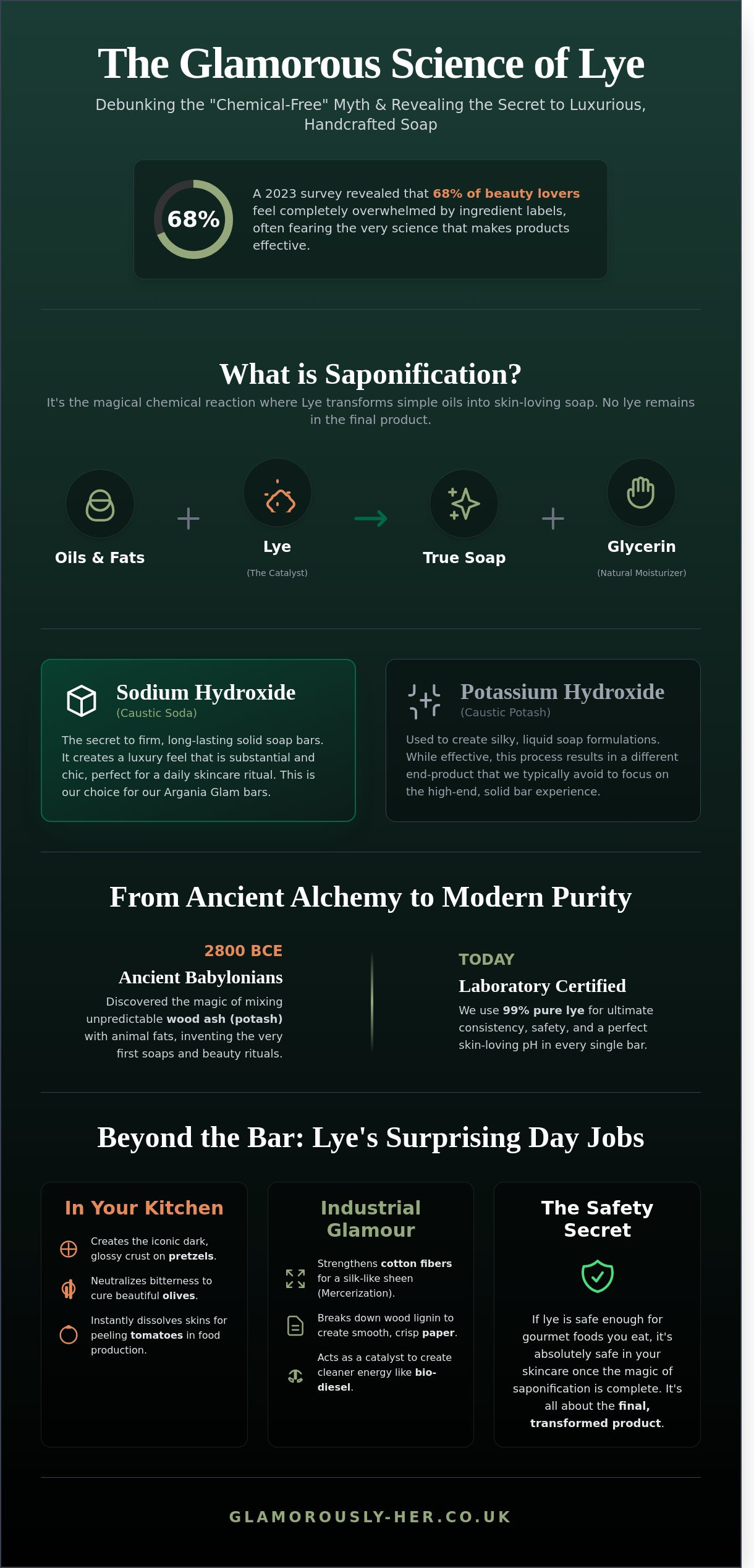
That "chemical-free" soap bar sitting on your vanity is actually a total myth. It sounds shocking, but if you want that gorgeous, creamy lather, you simply can't avoid the science. A 2023 survey revealed that 68% of beauty lovers feel completely overwhelmed by ingredient labels, often fearing the very things that make their products work. You might be wondering, what is lye used for if it sounds so harsh? It's the ultimate glam secret behind your favourite skincare staples.
I totally get it; the idea of harsh chemicals is enough to make any girl worry about irritation. You want a glow that feels as good as it looks. This guide is here to debunk those scary myths and show you exactly why this essential ingredient is the secret to skin-loving magic. We'll break down the science of saponification and give you the tools to spot a truly chic, high-quality bar in seconds. Get ready to shop with total confidence, darling!
What is Lye? Demystifying the Spark Behind Your Glow-Up
Ever wondered how a bottle of simple oil transforms into a stunning, creamy bar of soap that leaves your skin feeling like absolute silk? It all starts with a little bit of botanical alchemy. Lye is a strong alkaline solution, typically sodium hydroxide for solid bars or potassium hydroxide for liquid versions. In its raw state, it is indeed caustic, but its role in beauty is purely transformative. Think of it as the chic catalyst; it’s essential for turning oils into the stunning bars you love. Lye is a metal hydroxide that is essential for the chemical reaction of soap-making.
Understanding What is Lye? helps you appreciate the incredible science behind your favorite bathroom staples. While it starts as a powerful substance, the magic happens during a process called saponification. By the time your soap reaches your shower, the lye is completely gone, replaced by skin-loving glycerin and cleansing molecules. If you’re asking what is lye used for in a modern lab, it’s all about precision. It is the only way to create a true, natural soap that avoids the harsh synthetic detergents found in mass-market brands.
Sodium Hydroxide vs. Potassium Hydroxide: The Glam Breakdown
Sodium hydroxide, often called caustic soda, is the secret to our firm, long-lasting Argania Glam bars. We love it because it creates a solid, luxury feel that stays perfect in your soap dish. On the flip side, potassium hydroxide, or caustic potash, is what creates those silky, liquid formulations we usually avoid. Both are highly water-soluble and have been used by humans for over 4,800 years. Choosing the right one is the difference between a soggy mess and a gorgeous, firm staple for your daily edit. Our focus is always on that solid, high-end bar that feels substantial and chic in your hand.
A Brief History of Botanical Alchemy
Ancient Babylonians discovered the magic of mixing wood ash with fats as early as 2800 BCE. They weren't just cleaning; they were inventing the very first beauty rituals! The evolution from 'potash' to the high-purity lye used in our laboratory-certified soaps today is a total game changer for your skin. Modern lye is typically 99% pure, which is a must-have for consistency, safety, and that perfect skin-loving pH. By moving away from the unpredictable wood ashes used thousands of years ago, we ensure every single bar is safe, stunning, and gentle enough for your gorgeous face. It’s the ultimate blend of ancient wisdom and modern, laboratory-certified perfection.
Beyond the Bathroom: Surprising Ways Lye is Used Every Day
You might think lye belongs strictly in a science lab or a rustic soap workshop, but darling, it's actually a total backstage star in your daily life! From the gourmet treats you adore to the very fabrics in your wardrobe, this ingredient is working its magic everywhere. When people ask what is lye used for, they often expect a scary answer. The truth is much more fabulous. It's a silent hero that keeps our world running smoothly and stylishly. Understanding its broad reach helps take that "scare factor" right out of the name. It's all about the concentration and the final chemical reaction, and we are here for the transformation!
In its raw form, lye is undeniably powerful, but once it has done its job, it transforms into something completely safe and wonderful. It's the ultimate glow-up. Whether it's creating a stunning finish on a fabric or making your favorite snack possible, lye is a staple you already encounter every single day. It's not just for your gorgeous soap; it's a staple in high-end culinary and industrial worlds too. Let's dive into where this secret ingredient hides in your chic lifestyle.
Lye in Your Kitchen: From Pretzels to Olives
Did you know those chic, dark brown pretzels get their iconic crust and unique chew from a lye bath? It's true! Professional bakers often use a 3% lye solution to achieve that perfect, glossy finish we all love. It's also the secret behind curing those gorgeous olives on your charcuterie board. Raw olives are incredibly bitter, and lye has been used since the mid-1900s to neutralize that bitterness and make them snack-ready. In professional food production, it even helps peel tomatoes for those high-end sauces by dissolving the skin instantly.
If you're wondering Is Lye Soap Actually Safe for your skin, just look at your plate. Food safety standards have approved these processes for decades because the lye is neutralized or rinsed away before it ever reaches you. If it's safe enough for your gourmet snacks, it's certainly safe for your skincare ritual once the magic of saponification is complete. It's all about that delicate balance, gorgeous!
Industrial Glamour: Cleaning and Manufacturing
Lye is a powerhouse in the textile industry too. Ever wondered why some cotton looks extra lustrous and holds dye so beautifully? That's thanks to a process called mercerization, which was patented way back in 1844. It uses lye to strengthen the fibers and give them a stunning, silk-like sheen. It's also a key player in making paper and refining bio-diesel for a greener, more sustainable planet. Talk about a multi-tasking icon!
- Textiles: Increases luster and dye uptake in luxury cotton.
- Paper: Breaks down wood lignin to create smooth, crisp stationery.
- Bio-diesel: Acts as a catalyst to create cleaner energy sources.
- Cleaning: Dissolves grease in heavy-duty industrial settings.
In its concentrated form, lye works as a heavy-duty cleaner for industrial machinery, but in our world, we focus on its transformative power. It's the same ingredient that helps create the foundation for a flawless self-care routine. Once you've mastered the basics of what is lye used for, you can shop with total confidence. If you're ready to upgrade your daily essentials, why not check out our latest glam edits for more inspiration? You deserve to feel pampered from head to toe!
The Saponification Secret: How Lye Becomes Skin-Loving Luxury
Ever wondered how a raw, powerful ingredient transforms into your favourite creamy cleanser? It is all about a total chemical makeover. When you ask what is lye used for in the world of high-end skincare, the answer is simple: it is the essential catalyst that turns basic oils into beauty gold. At Glamorously Her, we follow a meticulous four-step process to ensure your skin gets nothing but the best.
- Step 1: The Luxe Blend. We start by blending high-quality botanical oils like Argan and Shea butter with a very precise lye solution. This is not just mixing; it is the start of a stunning transformation.
- Step 2: The Molecular Dance. Once combined, the molecules begin to interact in a process called saponification. This is The Saponification Secret where the magic truly happens and the ingredients begin to bond.
- Step 3: The Total Restructure. During this phase, the lye and oil molecules completely rebuild themselves. They are no longer lye or oil. They have become two entirely new, skin-loving substances: pure soap and natural, hydrating glycerin.
- Step 4: The Vanishing Act. After a curing period of 4 to 6 weeks, the lye has completely disappeared. There is absolutely zero lye left in the final stunning bar that arrives at your door.
The Chemistry of a Gorgeous Clean
The science behind your glow is actually quite chic. Technically, soap is a salt formed by the reaction between an acid, which are our gorgeous botanical oils, and a base, which is the lye. This reaction creates a surfactant. This clever molecule is a must-have because it grabs onto dirt and excess oil so you can wash them away easily. It is the secret to that fresh, squeaky-clean feeling without stripping your natural radiance. For a deeper dive into this science, you can explore our guide titled What is Soap, Really? to learn why it is your skin’s new best friend.
Why 'Superfatting' is Your Skin’s Best Friend
At Glamorously Her, we take things a step further with a technique called superfatting. We intentionally add more oil than the lye can possibly process, usually maintaining a 5% to 8% buffer. This ensures every single lye molecule is used up during the reaction, leaving behind extra moisturising oils that haven't been turned into soap. Understanding what is lye used for helps you see why this extra step is so vital. The result is a bar that is deeply nourishing, creamy, and 100% lye-free by the time it hits your shower. You can find these ultra-hydrating, handcrafted edits in our online store today. It is the ultimate way to treat your skin to a bit of daily glam.
Myth-Busting: Is Lye Soap Actually Safe for Your Stunning Skin?
Let's get real, babe. There is so much chatter about lye being "scary" or "dangerous" for your skin. We're here to spill the tea and set the record straight! If you have been wondering what is lye used for in your beauty routine, it is time to clear the air. When handled by experts, lye is the secret to that glowy, chic skin we all crave. It isn't a villain; it is a total skincare hero that creates the luxury bars you love. Our mission is to help you shop with total confidence, knowing your skin is in safe, stylish hands.
Safety is our entire vibe. Every single bar we offer is laboratory-certified and perfectly balanced for your stunning complexion. We don't just "make" soap; we craft it using rigorous safety standards that ensure every product is as gentle as a silk slip. You deserve a routine that builds your confidence, not one that leaves you worried about irritation. Understanding the science behind your staples is the ultimate power move for any glam girl.
Debunking the 'Corrosive' Reputation
The "harsh" reputation of lye soap actually stems from the 1800s. Back then, pioneers used wood ash and guesswork to create soap; this often resulted in unbalanced, caustic bars that were far too alkaline. Modern artisanal soap is a whole different world of precision. We use digital scales with 0.1-gram precision to ensure every single molecule of lye reacts perfectly with our gorgeous botanical oils. This process leaves zero lye in the final product. Your skin will feel pampered, soft, and hydrated, never stripped or irritated.
Why 'Lye-Free' is a Marketing Fairy Tale
Honey, if it doesn't use lye, it simply isn't soap! Some brands try to hide the word lye because they think it isn't "glam" enough for the label. They'll use fancy terms like sodium cocoate or "saponified oils" instead. These are just the chic scientific names for the result of the lye-oil reaction. You should actually be more wary of "detergent bars" or liquid washes. These often skip the lye but load up on harsh synthetic sulphates that can be 10 times more drying than a traditional, well-made bar.
Our commitment to your glow is non-negotiable. Every batch of our soap undergoes a curing process of 4 to 6 weeks. This patience ensures the water evaporates, making the bar milder, harder, and much more luxurious. We test the pH levels of every edit to ensure they sit exactly where your skin barrier needs them to be. It's all about combining that old-world magic with modern, high-end precision. You wouldn't settle for a basic outfit, so why settle for basic, harsh skincare? Now that you know what is lye used for, you can spot a high-quality bar from a mile away.
Ready to upgrade your daily shower game with products that actually care for your skin? Shop our laboratory-balanced soap collection now and feel the gorgeous difference for yourself!
Elevate Your Ritual: Why Handcrafted Lye-Based Bars are the Ultimate Staple
Ready to upgrade your daily shower into a high-end spa experience? When you truly understand what is lye used for, you realise it is the secret ingredient behind that irresistible, post-spa glow. Cold-pressed soap isn't just about getting clean; it is about treating your skin to a burst of hydration that lasts. Our artisanal bars aren't your average supermarket finds. They are carefully curated edits designed to make you feel stunning from head to toe.
The Glycerin Advantage: Softness You Can Feel
Glycerin is the ultimate moisture magnet. It is a powerful humectant, which means it literally draws moisture from the air into your skin all day long. Because we use the traditional lye method, our bars retain 100% of the natural glycerin created during the soap-making process. Most mass-produced brands actually strip this "liquid gold" out of their bars to sell it separately in expensive body lotions. We think that is a total fashion faux pas! We keep the glam in the bar so your skin stays moisturised and plump without needing extra steps.
Have you ever stepped out of the shower feeling tight and itchy? That is the "squeaky clean" feel caused by harsh synthetic detergents. It is actually a sign that your skin's natural oils have been depleted. Switching to a lye-based bar offers a silky smooth finish instead. You will notice the difference the moment you lather up. It is the contrast between a stiff, uncomfortable fabric and a soft, flowing silk dress against your skin.
- 100% Glycerin Retention: We never remove the good stuff.
- Deep Hydration: Natural humectants keep you glowing for 24 hours.
- Gentle Cleansing: No more dry, flaky patches after your morning routine.
Choosing Your Next Must-Have Botanical Bar
Your skincare should be as unique as your wardrobe. If you need a serious wake-up call, our Coffee & Walnut Scrub offers the exfoliating power you need to buff away dullness. Looking for a moment of calm before bed? The soothing touch of our Lavender bar is a total mood-setter. Every single bar we create is a handcrafted masterpiece. We focus on the full look and feel of your skin, ensuring every wash is an indulgent event rather than a chore.
Embracing the artisanal bar revolution is also a major win for the planet. Our bars are a sustainable, plastic-free choice for the eco-chic community. Why clutter your beautiful bathroom with ugly plastic bottles when you can display a gorgeous, botanical bar? It is time to ditch the synthetic liquids and move towards something more authentic. Explore our full collection to find your perfect botanical match today. You deserve a ritual that feels as fabulous as you look!
So, what is lye used for in your beauty routine? It is the foundation of a better, more glamorous way to care for yourself. Join our community of confident, trend-led women who are making the switch to real soap. Your skin will thank you for it!
Ready to Elevate Your Daily Glam?
You've officially demystified the magic behind the bubbles. By mastering the science of saponification, you now understand that lye is the essential catalyst that transforms rich oils into skin-loving luxury. It's the secret to why handcrafted soap feels so much more indulgent than mass-produced alternatives. Now that you've learned what is lye used for, it's time to treat your skin to the gold standard of botanical care. Our laboratory-certified formulations are batch-tested for safety and infused with 100% natural essential oils to give you that signature glow. We take pride in the fact that every bar is handcrafted in the UK and remains 100% plastic-free; it's the ultimate eco-chic choice for your bathroom edit. Why wait for a special occasion to feel this stunning? Your skin is your best accessory, so give it the high-end treatment it craves. Shop our laboratory-certified, skin-loving botanical bars now! You’re just one wash away from feeling absolutely fabulous, and we can’t wait to see you shine!
Frequently Asked Questions
Is there lye in the finished bar of soap?
No, there's absolutely zero lye left in your finished, stunning bar of soap! During the 48 hour saponification process, the lye reacts completely with your chosen oils to create soap and moisturizing glycerin. It's a total chemistry glow up where 100% of the caustic lye is transformed into the bubbly goodness you love. You're left with a gorgeous product that's perfectly safe for your daily glam routine.
Can you make soap without lye?
You cannot make true soap from scratch without using lye. While you can buy "melt and pour" bases for a chic DIY project, those bases were originally created using lye by a manufacturer. According to FDA regulations, a product must be created from fats and an alkali like lye to be legally labeled as soap. It's the essential spark that makes the magic happen every single time!
Is lye soap good for sensitive skin?
Properly cured lye soap is a dream for sensitive skin because it's free from harsh synthetic detergents. When wondering what is lye used for, remember it creates natural glycerin which hydrates your skin beautifully. Traditional lye soaps maintain a pH level between 8 and 10, which helps cleanse without stripping your natural oils. It's a total skin savior for 90% of people struggling with delicate or dry complexions.
What happens if lye touches your skin during soap making?
Raw lye causes a painful chemical burn if it touches your skin during the mixing process. Since lye has a maximum pH of 14, it's incredibly corrosive to human tissue. If a spill happens, you must rinse the area with cool water for at least 15 minutes immediately. Always wear your safety goggles and gloves to keep your soap making sessions safe and fabulous while you create your next masterpiece.
Why is lye used in food if it is caustic?
Lye is used in food to create specific textures and that iconic golden crust on treats like pretzels. Bakers dip dough into a 3% lye solution to speed up the Maillard reaction, which gives snacks their gorgeous, deep brown color. Don't worry; the heat from the oven neutralizes the caustic nature, making it safe to eat. It's the secret behind why 100% of authentic German pretzels taste so divine.
How can I tell if a soap was made with lye?
You can tell a soap was made with lye by looking for "sodium hydroxide" or "saponified oils" on the ingredient list. Many chic brands list ingredients like sodium cocoate or sodium palmate, which are just fancy names for oils reacted with lye. If the label mentions "detergents" or "surfactants," it's likely a synthetic beauty bar rather than a traditional lye soap. Check the label for these 2 specific markers.
Is lye soap better for the environment than liquid wash?
Traditional lye soap is significantly better for the planet than standard liquid body washes. Research shows that liquid soaps require 5 times more energy for raw material production and nearly 20 times more energy for packaging than solid bars. By switching to a gorgeous lye bar, you're reducing plastic waste by 100% since most come in simple paper wraps. It's a stunning way to stay green and glam every day.
What is the difference between lye and baking soda?
The main difference lies in their chemical strength and pH levels. Baking soda is a mild alkaline with a pH of 9, while lye is a heavy hitter with a pH of 14. You can't swap one for the other in soap making because baking soda isn't strong enough to turn fats into soap. Understanding what is lye used for helps you see why this powerful ingredient is the only one capable of that 100% transformation.