What if the secret to your most radiant, chic glow isn't a £100 serum, but a deeper understanding of your humble bar of soap? We've all been there, gorgeous. You step out of the shower feeling 'clean' but your skin feels two sizes too small; it's totally frustrating when mass-produced washes leave your skin barrier feeling stripped and thirsty. If you've ever asked yourself how does soap work, you're likely tired of the 50% of synthetic cleansers on supermarket shelves that cause irritation instead of hydration.
You deserve to ditch the 'chemical' confusion and finally embrace the stunning results of natural ingredients. Discover the fascinating science of how soap molecules bridge the gap between water and oil to leave your skin stunningly clean and radiant. We're diving into the molecular magic of the skin barrier and showing you how to choose a natural bar that protects your glam vibe every single day.
The Chemistry of a Glow-Up: What Is a Soap Molecule?
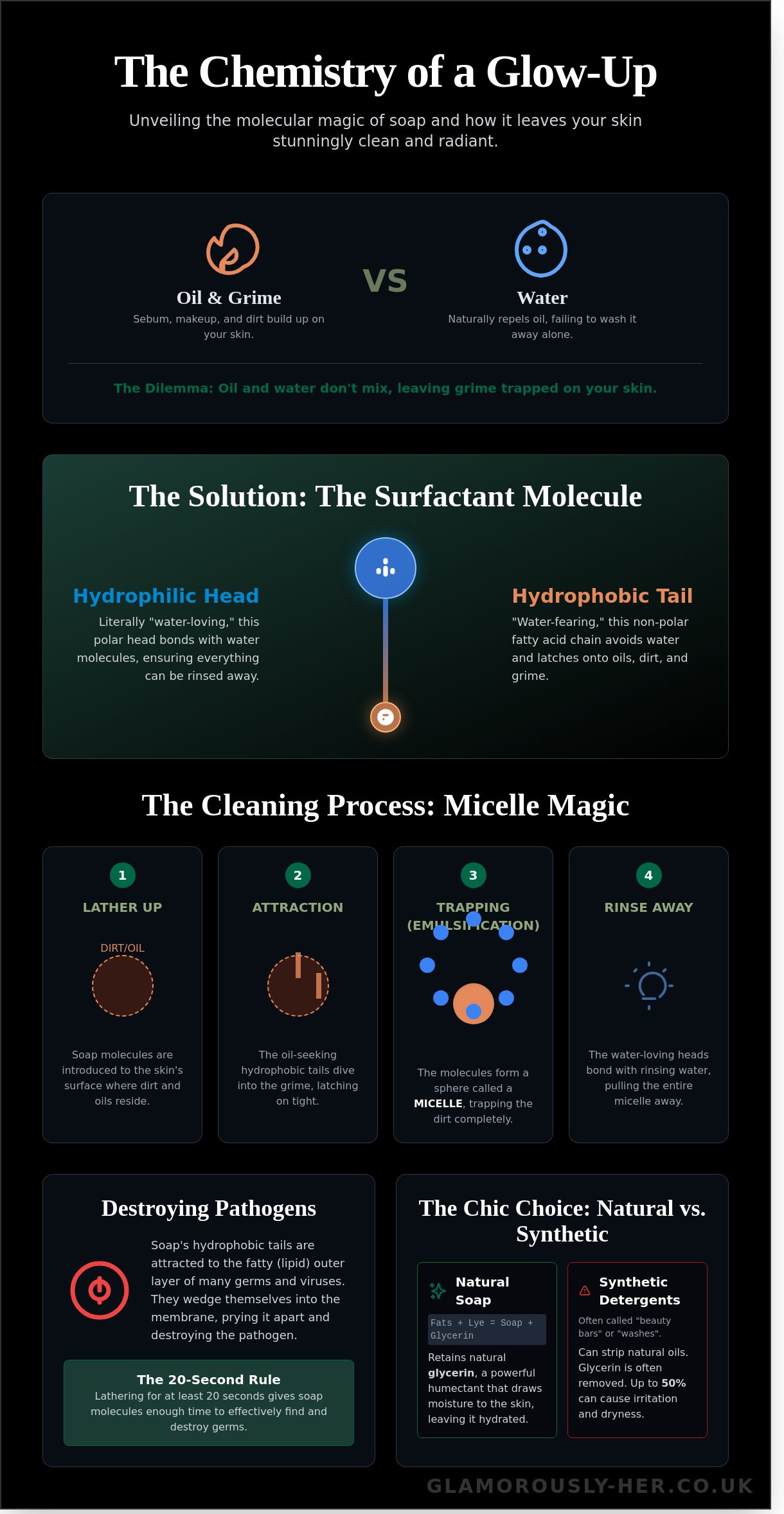
Have you ever noticed how water just beads off your skin after a long day of wearing high-performance SPF or your favorite long-wear foundation? It is frustrating! That is because oil and water are the ultimate frenemies. They refuse to mix, leaving your skin feeling less than fresh. This is where soap enters the chat as the ultimate peacekeeper. Soap is a surfactant, a brilliant little molecule that acts as a bridge between these two opposites.
So, how does soap work to give you that pristine, post-shower feeling? It all comes down to its unique, pin-shaped design. Think of it as a double-sided tool specifically engineered to grab onto grime while staying firmly attached to the water flowing from your tap. This molecular structure is exactly what makes soap a stunningly effective cleaner for your body and your home. Without this tiny bridge, your luxury body washes would just slide right off the surface without actually removing any of the day's bad vibes or buildup. It is the essential first step in any glam routine.
To really understand this process, we can look at The Chemistry of Soap and how it balances two completely different personalities in one single molecule. It is a total vibe shift for your skin. Here is the breakdown of your new favorite beauty tool:
- Dual-action design: One side loves water, while the other side lives for oil.
- Surfactant power: It breaks the surface tension, allowing water to actually wet the surface instead of just sitting on top.
- Emulsification: It traps oil in tiny bubbles called micelles so they can be rinsed away forever.
The Hydrophilic Head: The Water Lover
The head of the soap molecule is the polar end. In chemistry terms, hydrophilic literally means water-loving. This part of the molecule is absolutely obsessed with H2O. When you are lathering up in the shower, these heads act as the anchor, holding onto the water stream with everything they have. The hydrophilic head is the social butterfly of the molecule, instantly bonding with every water droplet it touches. It ensures that as the water goes down the drain, the soap molecule goes with it, taking the dirt along for the ride.
The Hydrophobic Tail: The Oil Seeker
On the flip side, we have the hydrophobic tail. This is a long, non-polar fatty acid chain that is essentially water-fearing. It wants nothing to do with your bathwater. Instead, it seeks out non-polar substances like sebum, stubborn makeup, and that thick layer of SPF you applied this morning. These tails are the secret to lifting the most persistent grime from your pores. They dive straight into the oils on your skin, latching on tight. By surrounding the oil, they lift it off your skin’s surface, making it easy to rinse away. It is the ultimate deep-clean edit for your gorgeous complexion.
Micelles and Magic: How Soap Lifts Dirt and Germs
Ever wondered how that gorgeous bar of soap actually gets you glowing? It’s not just a vibe; it's a total scientific transformation. Understanding how does soap work is like knowing the secret behind the perfect outfit; it’s all about the right components coming together to create a stunning result. Soap molecules are essentially double agents. One end is hydrophilic, meaning it’s obsessed with water, while the other is hydrophobic, which means it avoids water and clings to oils and fats.
When you start lathering up, these molecules rush toward the oils and grime on your skin. They arrange themselves into tiny, chic spheres called micelles. These clusters trap the grease and debris inside their oily centers, completely isolating the dirt from your skin. Learning the science behind how does soap work makes every shower feel like a high-end spa day because you know exactly how that deep clean is happening.
The Formation of Micelles
These molecular clusters are absolute game-changers for your beauty routine. They perform a process called emulsification, which turns stubborn, water-resistant oils into something water can easily carry away. It's much more effective than just scrubbing with a cloth, which often just moves the mess around without actually lifting it. According to the FDA definition of soap, true soap must be made of fats and oils combined with an alkali to achieve this unique lifting power. Once you've got your favorite glam bathroom staples ready, you're set for a luxurious, effective cleanse.
Breaking Down the Bad Stuff: Germs and Viruses
This process isn't just about looking stunning; it’s about serious hygiene. Many bacteria and viruses have a lipid, or fatty, outer membrane that protects them. The hydrophobic "tails" of the soap molecules are attracted to this fat. They literally wedge themselves into the germ's protective layer and pry it apart. This ruptures the membrane and destroys the pathogen instantly. To make this happen, you must hit the 20 second mark. That's the glam standard for lathering. It gives the molecules enough time to do their work. While some germs are destroyed, others are simply surrounded by micelles and physically rinsed away.
Don't forget the friction. Rubbing your hands together creates the mechanical energy needed to form those micelles and ensure the soap reaches every nook and cranny. Without that 20 second scrub, you're missing out on the full effect. When you finally rinse, the water-loving heads of the micelles grab onto the stream. They pull the trapped dirt and germs right down the drain. It’s a total refresh for your skin that leaves you feeling confident and ready to take on the day.
The Saponification Secret: Why Natural Bars Are the Chic Choice
Have you ever wondered why a boutique handmade bar feels like a total spa experience while a basic supermarket block leaves your skin feeling tight? The answer lies in a gorgeous bit of chemistry called saponification. This is the magic moment where fats and oils meet lye to create something entirely new. In its simplest form, the equation is Fats + Oils + Lye = Soap + Glycerin. It sounds like a science experiment, but it is actually the foundation of every stunning bar in your bathroom. If you want to dive deeper into the gritty details of the ingredients, you can explore what is lye used for to see how this secret magic works its wonders.
Understanding how does soap work starts with recognizing that not all bars are created equal. Most "soap" you find in massive retail chains isn't actually soap at all; it is a synthetic detergent bar, often called a "syndet." These were developed in the 1940s as a cheaper, mass-produced alternative to traditional methods. Real soap, especially the cold-processed variety, is made by mixing botanical oils with an alkali and letting them cure for four to six weeks. This slow process preserves the integrity of the ingredients, ensuring your skin gets all the loving goodness it deserves without the harsh chemicals found in industrial detergents.
By choosing natural, you are opting for a product that respects your skin's delicate balance. Research into How Soap Lifts Dirt and Germs shows that the molecular structure of real soap is perfectly designed to grab oil and rinse it away. This makes the cold-process method the most chic choice for anyone craving a healthy glow.
The Role of Botanical Oils
The oils chosen for a recipe define the entire vibe of the bar. Different fats create different molecular structures, which is why your favorite face bar feels different from a body scrub. Coconut oil is a superstar for creating big, fluffy bubbles, while olive oil provides a gentle, conditioning touch. You might see sodium cocoate on a label; this is a botanical powerhouse derived from coconut oil that cleanses effectively while staying totally glam. Using high-quality fats like shea butter or sweet almond oil leads to a more luxurious, creamy lather that feels like silk against your skin.
Glycerin: The Unsung Hero of Natural Soap
Glycerin is a natural byproduct of the saponification process, and it is a total game-changer for your skincare routine. It acts as a humectant, which means it draws moisture from the air into your skin to keep you feeling hydrated and chic all day long. Many big commercial brands actually strip the glycerin out of their bars to sell it separately in pricey lotions and creams. When you use a natural bar from our store, you keep that moisture right where it belongs. It is the difference between skin that feels parched and skin that looks absolutely stunning. Knowing how does soap work with your biology makes it clear why keeping the glycerin intact is a must-have for your beauty edit.
Protecting Your Radiance: How Soap Interacts with Your Skin Barrier
Darling, let's clear up one major beauty myth right now. You have probably heard that all soap is drying, but that simply is not the case! While some low-quality detergents can leave your skin feeling tight and parched, a well-crafted bar is actually a total game-changer for your routine. Understanding how does soap work on your delicate skin barrier is the first step toward achieving that effortless, lit-from-within glow we all crave.
Understanding the Skin Barrier
Think of your skin barrier as your own personal velvet rope. It is a complex layer of lipids and fats designed to keep hydration locked in while keeping environmental irritants out. When you use a soap that is too aggressive, you are not just washing away the day's grime. You are essentially stripping that essential protection. A truly good soap cleanses the surface without evicting the moisture that keeps your skin looking stunning.
If you find your complexion feels reactive or itchy after a shower, it is a sign your current routine is a bit too harsh. It is time for an upgrade! You can find the perfect match for your delicate face and body by exploring our guide to gentle soap for sensitive skin. Your 2026 glow up starts with choosing ingredients that love your skin back.
The pH Balance Debate
Let's talk about the "acid mantle," babe. This is the slightly acidic film on your skin's surface that acts as a shield against bacteria. While most traditional soaps are alkaline, healthy skin is incredibly resilient. Research shows that your skin typically bounces back to its natural pH level within 30 to 90 minutes after washing. The secret to how does soap work without causing irritation lies in the formulation.
- Superfatting: This is the ultimate industry secret! Soap makers add extra oils, like cocoa butter or sweet almond oil, that do not turn into soap. These oils stay on your skin to nourish it while you cleanse.
- Ingredient Quality: High-quality plant oils are always superior to synthetic fillers.
- Post-Wash Care: Always pat your skin dry and apply a moisturizer within 3 minutes of stepping out of the bath to lock in that gorgeous hydration.
The quality of your ingredients matters far more than the pH number alone. When a bar is "superfatted," it acts as a cleanser and a mini-moisturizer all in one. It is the chicest way to ensure your skin stays soft, supple, and ready for any occasion wear you have planned for the weekend.
Ready to elevate your daily ritual? Browse our curated collection and shop the latest bath and body essentials to keep your skin looking absolutely flawless.
Elevate Your Routine: Maximising the Glamour of Your Natural Soap Bar
Now that you're an expert on how does soap work, it's time to turn that science into a total bathroom vibe. Getting clean isn't just a daily chore; it's a ritual that deserves a touch of luxury. To get those molecules moving and your skin glowing, you need the right technique. Science meets style in your shower, and we want those micelles working overtime for your gorgeous skin. It’s all about the glam technique, babe.
To ensure your hair matches that professional glow, you can check out Hair Bar NYC Professional for salon-grade smoothing systems that bring a touch of expert luxury to your routine.
First, let’s talk temperature. Boiling hot water might feel relaxing after a long day, but it actually strips your skin’s natural oils and makes your soap dissolve far too quickly. Stick to lukewarm water, ideally around 37 to 38 degrees Celsius. This is the absolute sweet spot. It allows the soap molecules to trap dirt effectively without upsetting your skin’s delicate moisture balance. Your skin will feel soft, not stripped.
The Art of the Lather
Building a rich, creamy lather is where the micelle magic really happens. Don't just give the bar a quick rub and hope for the best. Follow these steps for the ultimate clean:
- Wet your hands and the bar with lukewarm water.
- Work the soap between your palms for at least 15 seconds.
- Wait for those gorgeous, dense bubbles to form before applying to your skin.
If you want to level up your routine, use a sisal bag or a soft washcloth. These tools create extra friction and surface area. This physical action helps the soap create even more micelles to lift away every trace of the day. It’s an exfoliating dream that leaves you feeling fresh and polished. Ready to find your next obsession? You can browse the store to find a stunning signature scent that matches your current mood.
Choosing your scent profile is a total power move. Citrus blends are a must-have for your morning wake-up call. They feel high-energy and bright. For your evening edit, lavender or sandalwood provides the ultimate relaxation vibe. Your skin deserves that bespoke feeling every single day.
Bar Care 101
Nothing ruins a chic bathroom aesthetic like a mushy soap bar. If your soap sits in a puddle of water, it’s basically melting away, and you're losing all those lovely botanical oils. To keep your bar stunning and long-lasting, it needs to breathe. Airflow is your best friend here.
Invest in a draining soap dish that keeps the bar elevated and away from standing water. This simple move can make your soap last up to 30% longer by letting it dry completely between uses. For more tips on keeping your eco-chic essentials in top shape, check out The Ultimate Guide to Bars of Soap. Your bar will stay firm, your bathroom will stay looking like a high-end boutique, and you'll get the most out of every single wash.
Ready to Master Your Most Radiant Glow Ever?
You've officially mastered the science of the suds! Understanding how does soap work is the ultimate beauty secret for a truly chic routine. You now know that those clever soap molecules act like tiny magnets to lift away impurities while natural saponification keeps your skin barrier feeling soft and pampered. It's time to ditch the harsh chemicals for a lab-certified formula that loves your skin back. Every bar we create is handcrafted in Scotland and undergoes rigorous testing to ensure it's laboratory certified for your peace of mind.
We've ditched the nasties, meaning you get zero synthetic fragrances and 100% plastic-free packaging that looks stunning on your vanity. Why settle for basic when you can have a laboratory-certified glow? It's the perfect way to elevate your daily edit and feel absolutely gorgeous from head to toe. Your skin is your best accessory, so treat it to the luxury it deserves.
Ready for a gorgeous glow? Shop our handcrafted soap bars now!
Stay glam and keep shining, because you deserve to feel fabulous every single day!
Frequently Asked Questions
Is soap actually a chemical?
Yes, darling, soap is a chemical compound created through a specific process called saponification! It typically involves a reaction between fats or oils and an alkali like sodium hydroxide. According to the American Cleaning Institute, this chemical reaction creates the surfactant molecules that lift away dirt. It is pure science meeting style to keep your skin looking gorgeous and fresh every single day.
Can soap work in cold water as well as hot?
Soap definitely works in cold water, though warm water at 38 degrees Celsius helps fats and oils dissolve much faster. You will still get a great clean in a chilly rinse because the molecular structure does not change. Understanding how does soap work helps you realize that while heat speeds things up, those clever molecules still grab onto grime even when you are keeping it cool.
Why does soap make bubbles, and are they necessary for cleaning?
Bubbles happen because soap lowers the surface tension of water, but they are mostly for show and do not actually clean your skin! Manufacturers often add boosters like sodium lauryl sulfate to create that luxe lather we all love. While a foamy wash feels like a total spa moment, the real magic happens at a molecular level where the soap traps dirt in tiny spheres called micelles.
Is bar soap more hygienic than liquid soap?
Both bar and liquid soaps are equally hygienic for your stunning daily routine. A landmark 1988 study published in the journal Epidemiology and Infection proved that bacteria do not transfer from a used bar to your hands during washing. Whether you prefer a chic bar or a pump bottle, you are getting a 100 percent effective clean. Just keep your bar on a draining dish to keep it fresh!
Does natural soap expire or lose its cleaning power?
Yes, your favorite natural soaps usually have a shelf life of 12 to 24 months before the botanical oils go rancid. Since they lack synthetic preservatives, the gorgeous scents might fade and the texture can change after the 1 year mark. Check for a Period After Opening symbol on the packaging. If it smells off or looks orange, it is time for a fresh, chic replacement to keep your glow.
What happens if I don't rinse the soap off properly?
Leaving soap on your skin can lead to irritation or even contact dermatitis because it disrupts your natural pH level of 5.5. When soap stays put, it keeps breaking down your skin's protective lipid barrier. This leads to dryness and redness that totally ruins your vibe! Always give yourself a thorough rinse to ensure your skin stays soft, hydrated, and ready for your favorite moisturizer.
Can I use the same soap for my body and my face?
You should definitely use a dedicated facial cleanser because the skin on your face is about 0.12 millimeters thick, which is much thinner than your body skin. Standard body bars often have a high pH of 9 or 10, and that is way too harsh for your delicate complexion. Grab a pH balanced wash for your face to keep it looking stunning. Your body handles the stronger stuff well!
How does soap work against oily skin vs dry skin?
On oily skin, soap works by binding to excess sebum and washing it away for a matte, fresh finish. If you have dry skin, you must be careful because the same process can strip away the 10 percent of natural oils needed to stay hydrated. Learning how does soap work helps you choose a hydrating formula with added glycerin. This ensures you get clean without losing that essential, healthy moisture.